


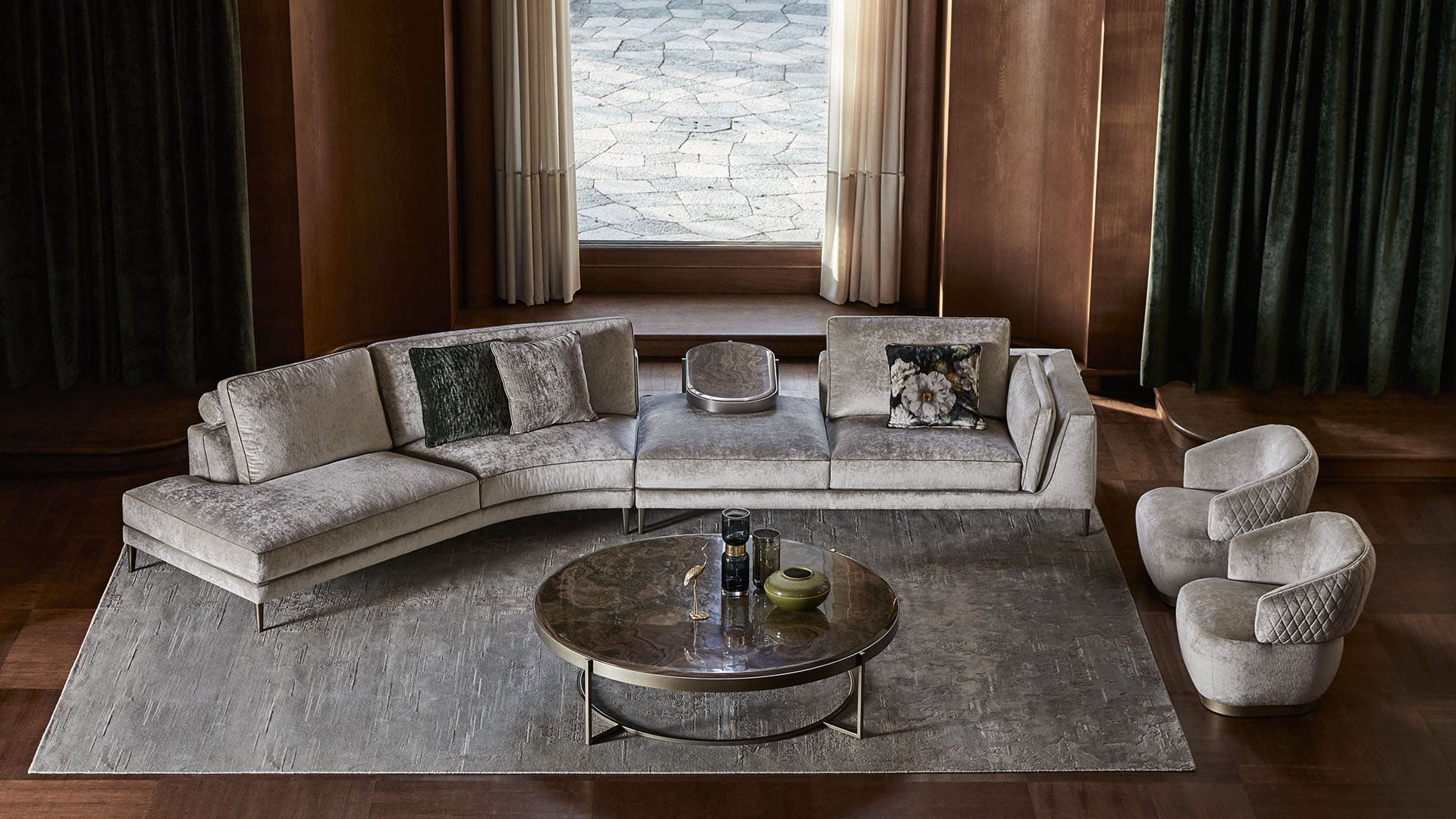
08 Jul Luxury Modular Sofas: How to Design Modular Living Rooms in 2026
Luxury Modular Sofas: How to Design Modular Living Rooms in 2026
In high-profile projects—from large private residences to hospitality suites, from 5-star hotel lounges to the common areas of exclusive residential developments—the modular sofa has established itself as the solution most sought after by architects and interior designers. It is no longer just a functional product, but a true design tool: it allows you to shape the space, not just furnish it.
In 2026, this category will undergo a significant evolution, which is worth exploring for those working on high-end contract or residential projects.
Why the modular sofa is central to the 2026 designs
Unlike a fixed sofa, a modular sofa meets an increasingly common need in luxury design projects: the fluidity of spaces. Living rooms that open onto the outdoors, lounge areas that must adapt to different uses throughout the day, and hospitality suites that require flexible configurations based on the number of guests. Modularity makes it possible to meet all these needs without compromising the project’s aesthetic coherence.
Discover the available configurations in the Opera Contemporary modular sofa collection.
Request a design consultation
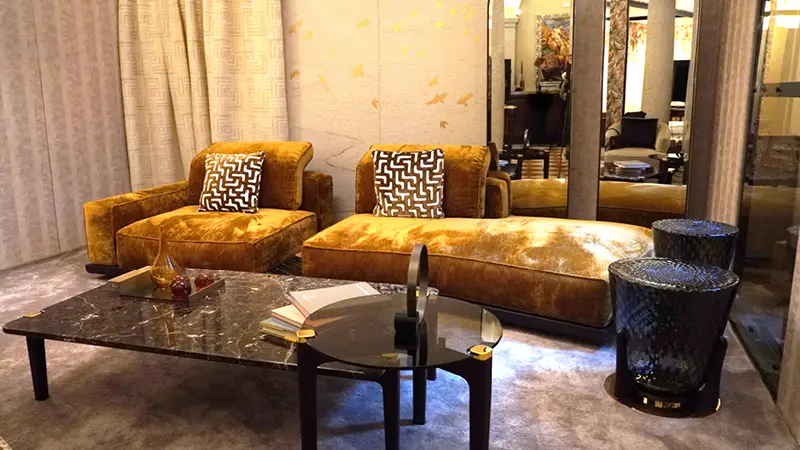
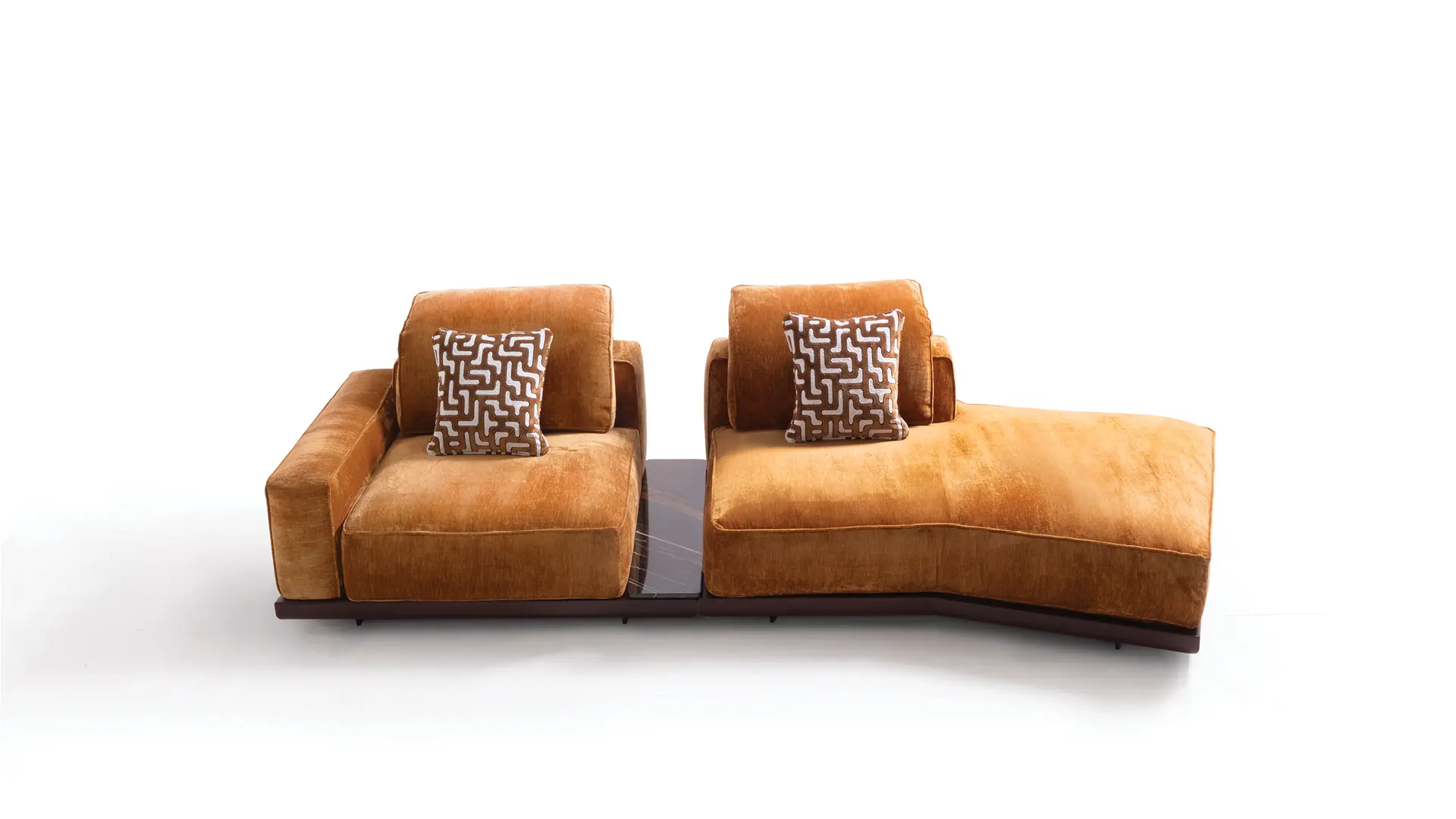
2026 Trends for Modular Sofas
1. Extreme modularity, not just the ability to combine components
The year 2026 marks the transition from standard “corner” modules to systems that are truly modular in every direction: central islands, peninsula configurations, and individual modules that can be rearranged over time to adapt to changes in the space. For a contract project, this means being able to offer a solution that adapts to different floor plans while maintaining the same design language throughout the collection.
2. Sculptural forms instead of rigid geometry
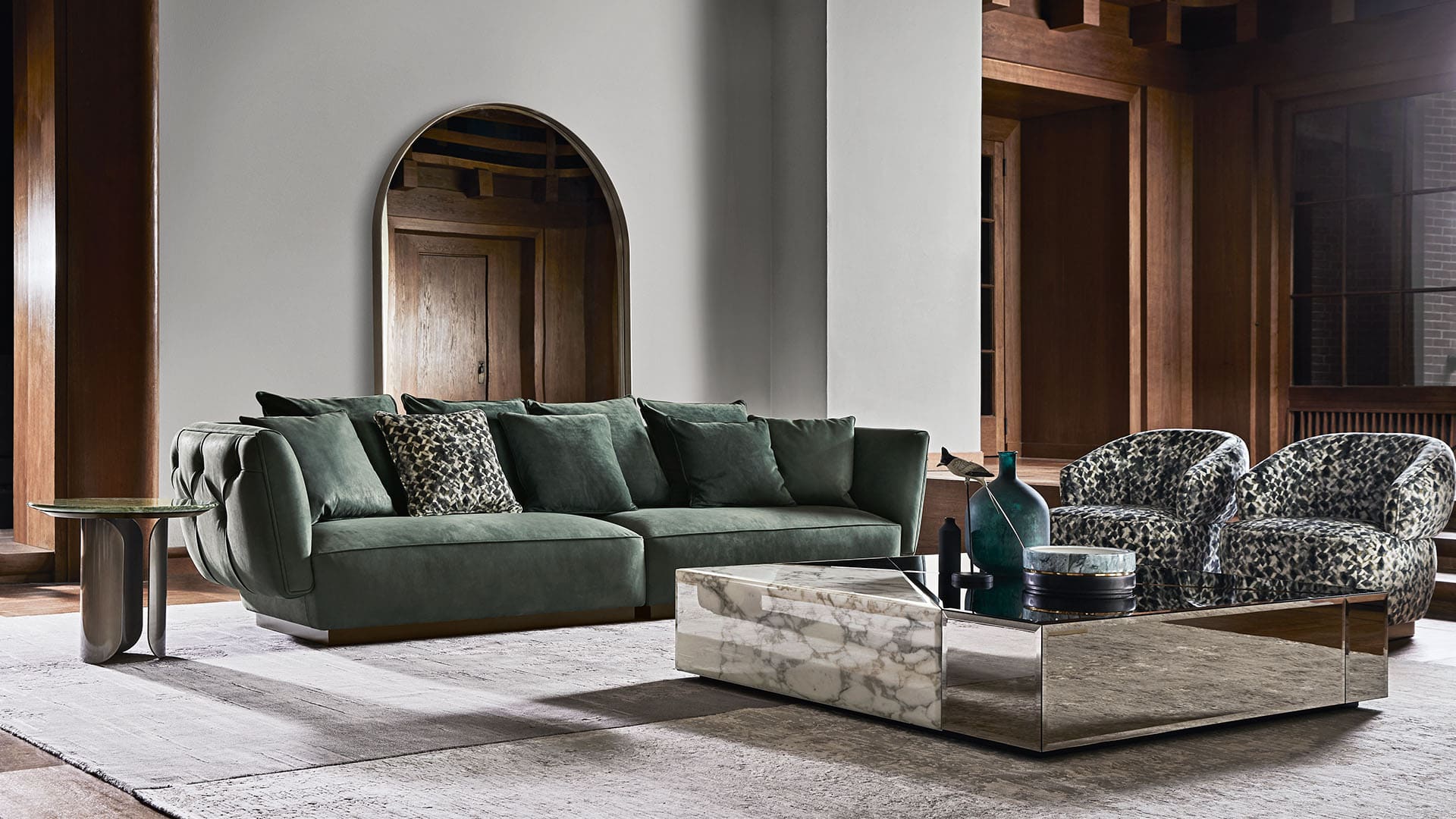
While in recent years modular sofas favored clean lines and sharp angles, today the trend is toward softer, more sinuous shapes: rounded backrests, armrests that blend into the seat, and continuous contours that make the sofa an almost sculptural piece, even in its most expansive modular version.
3. Authentic, textured finishes
Upholstery follows the same trend already evident in the rest of the luxury furnishings: bouclé, matte velvets, and natural-looking fabrics are replacing glossy finishes. Texture becomes part of the piece’s visual language, perceptible even from a distance—a key element for hospitality spaces, where the sofa must convey quality even in environments that are photographed or experienced briefly.
4. Palette naturali e calde
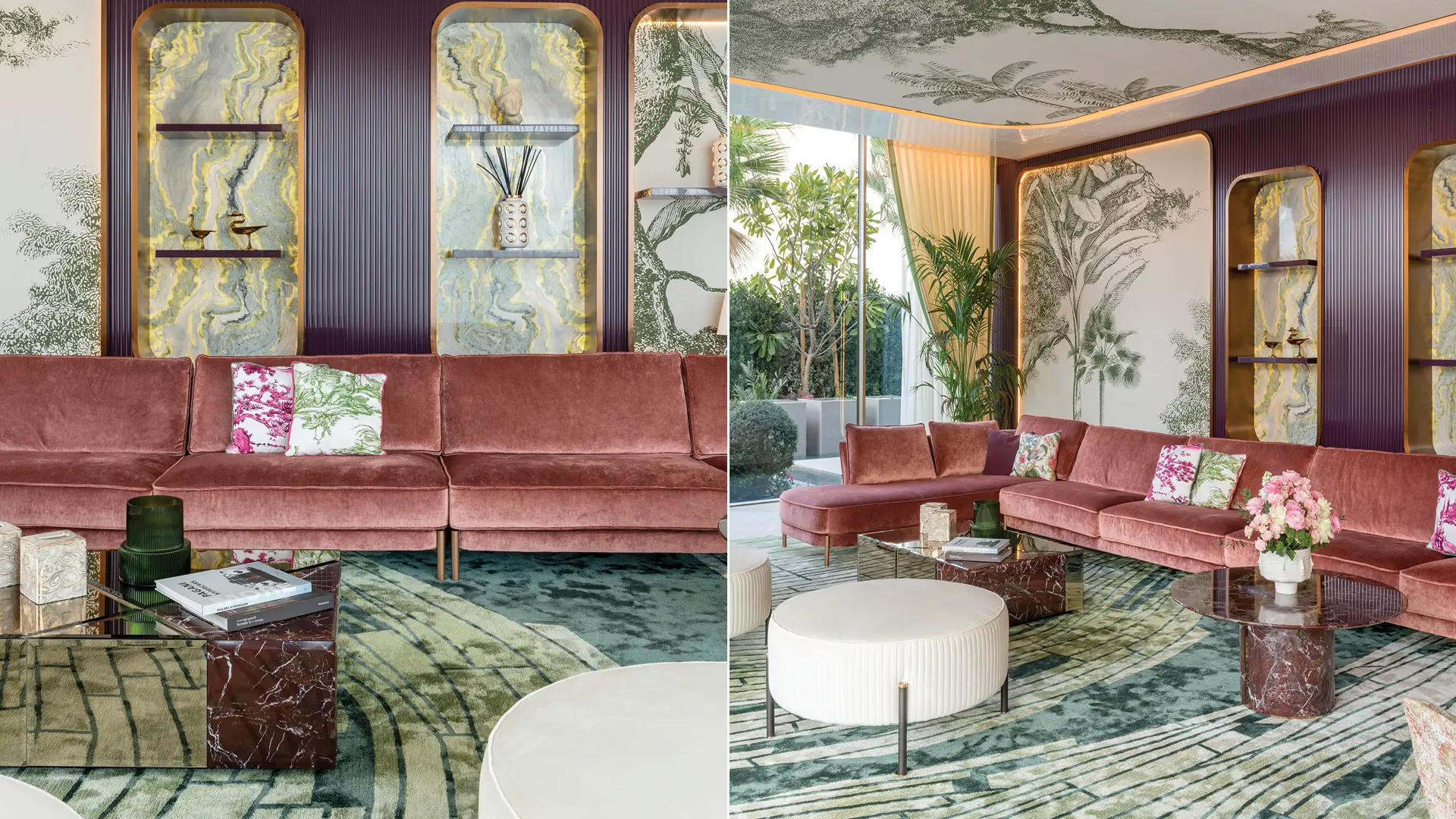
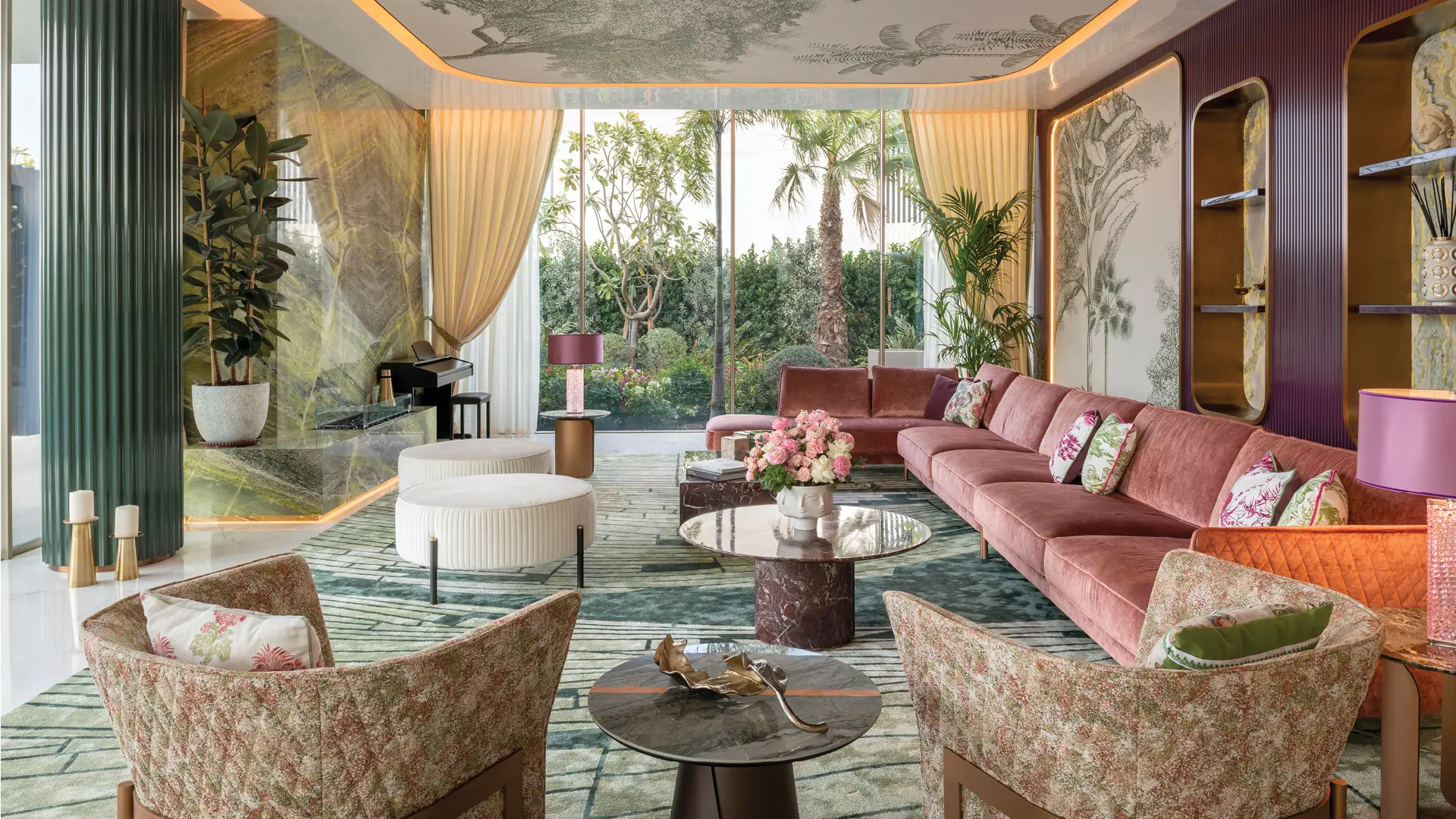
Sage green, terracotta, sandy hues, and deep blues are replacing the neutral grays that have dominated for years. In modular designs, this allows the sofa to serve as the room’s dominant color element, rather than simply a “neutral base” upon which to build the rest of the decor.
5. Integration with the rest of the living room
The 2026 modular sofa is no longer conceived as a standalone piece, but rather as one that engages in direct dialogue with the other elements of the living room: small table bases that echo the same materials or finishes, designer armchairs that complement the layout without duplicating it, and console tables that define the boundaries of the living space.
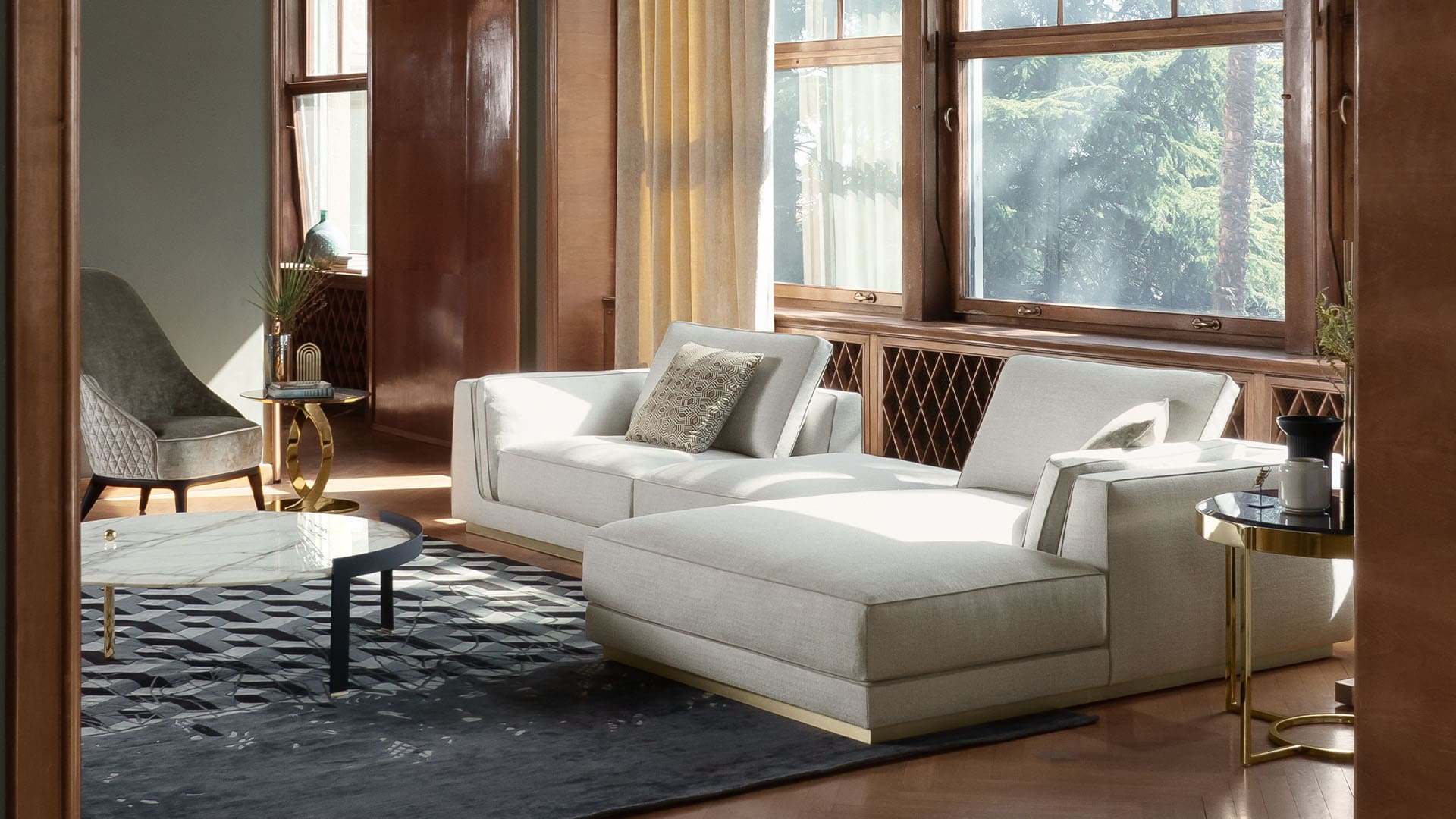
How to Specify a Modular Sofa in a Contract Project
For those working on large-scale hospitality or residential projects, there are a few tips that can help you make the most of modularity:
- Think in terms of functional zones, not fixed square footage: first define the space’s functions (conversation, a view of a focal point, relaxation), and then arrange the modules accordingly
- Balance texture and color with the rest of the room: a large modular sofa can easily become the dominant feature of the room, so it should be coordinated with the other furnishings
- Planning for Future Flexibility: In hospitality projects, the ability to reconfigure modules over time is often a requirement explicitly requested by the end client.
The modular sofa of 2026 is no longer just a solution to space constraints, but a true design tool capable of defining the identity of a space. Sculptural forms, authentic textures, and natural color palettes make it a standout feature in both residential projects and the most demanding commercial projects.